
It's how you use it
Bigger and better AI models could be secondary to bespoke processes and tuning

During these first few years of the “AI boom” there has been a lot of emphasis on who is producing the latest and greatest model that has the most capabilities.
However, an argument is growing that just having the frontier model (the latest GPT, the latest Claude, etc.) shouldn’t be the be all and end all, recently explained in an article by Microsoft CEO Satya Nadella.
In my view, our priority has to be building a frontier ecosystem, not just a frontier model, so value flows broadly across every company, every industry, and every country. One where every organization can own the learning loop that encodes its institutional knowledge, compounding its human and token capital.
This is effectively a call for democratization of the benefits of AI across sectors rather than being beholden to only those who develop and offer their frontier models through a software-as-a-service model.
But is this really feasible, and how are some people and organizations trying to accomplish this today?
Security Research without Mythos
Anthropic’s Mythos (later publicly released as Fable) model was allegedly so powerful in finding zero-day exploits in software, that it was locked away from the public eye for months, and then withdrawn at the US governments’ request due to national security fears.
However, as explained in this recent video by LowLevel, Zhenpeng (Leo) Lin, a security researcher at DepthFirst found 21 Zero-Days in FFmpeg, but they didn’t need the latest Claude model to do it. Instead DepthFirst break their process down into steps, with the AI being controlled through logic to dig through the code systematically to avoid the context overload problem.
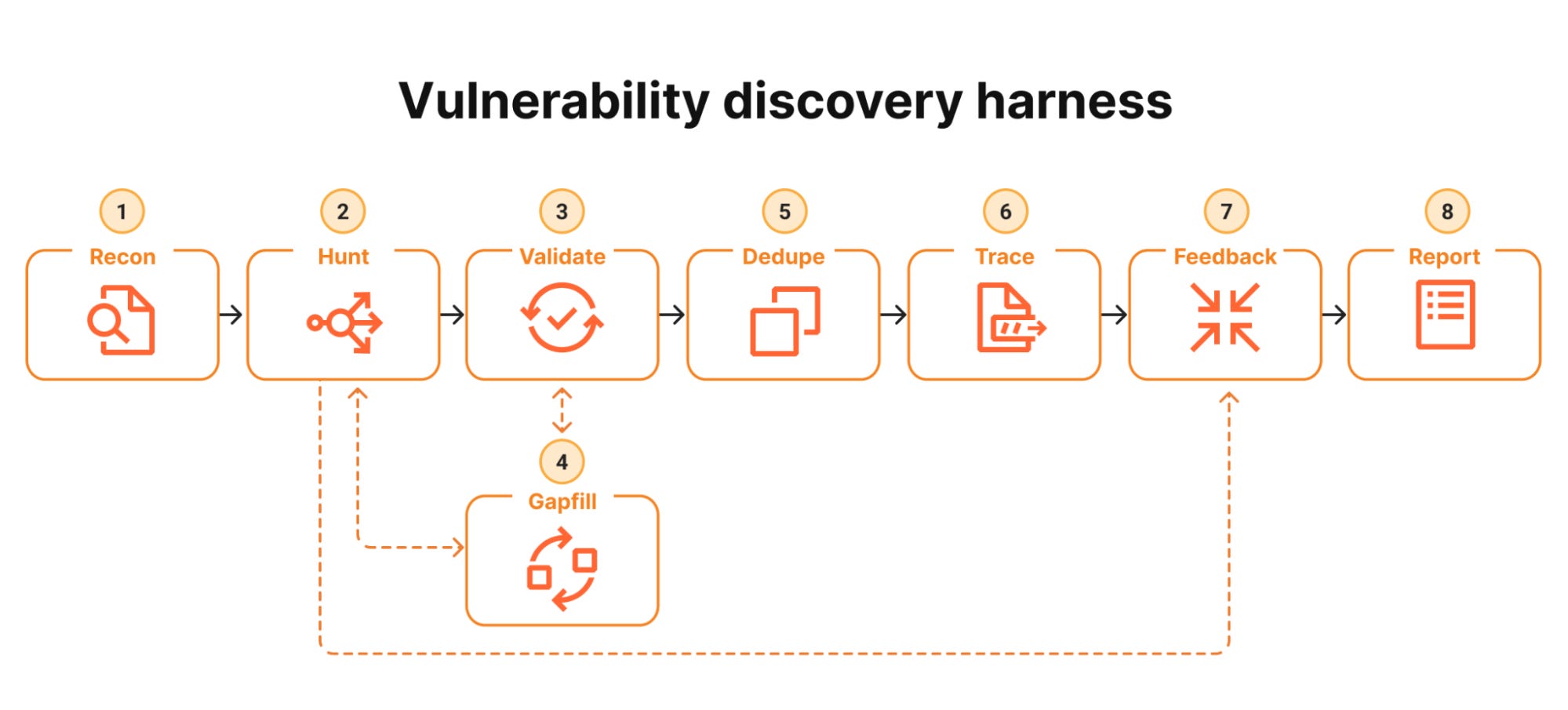
This highlights that the model itself doesn’t have to do all the heavy lifting. This is an example of the kind of “learning loop” that Nadella is referring to, where organizations can deploy less complex models in a more intelligent way to get more out of them.
AI powered Law Firms
In a recent episode of This Week in AI, Ryan Daniels from Crosby explains how their law firm is embracing AI, and doing something similar to what Nadella outlined - developing their process in-house in concert with skilled legal professionals.
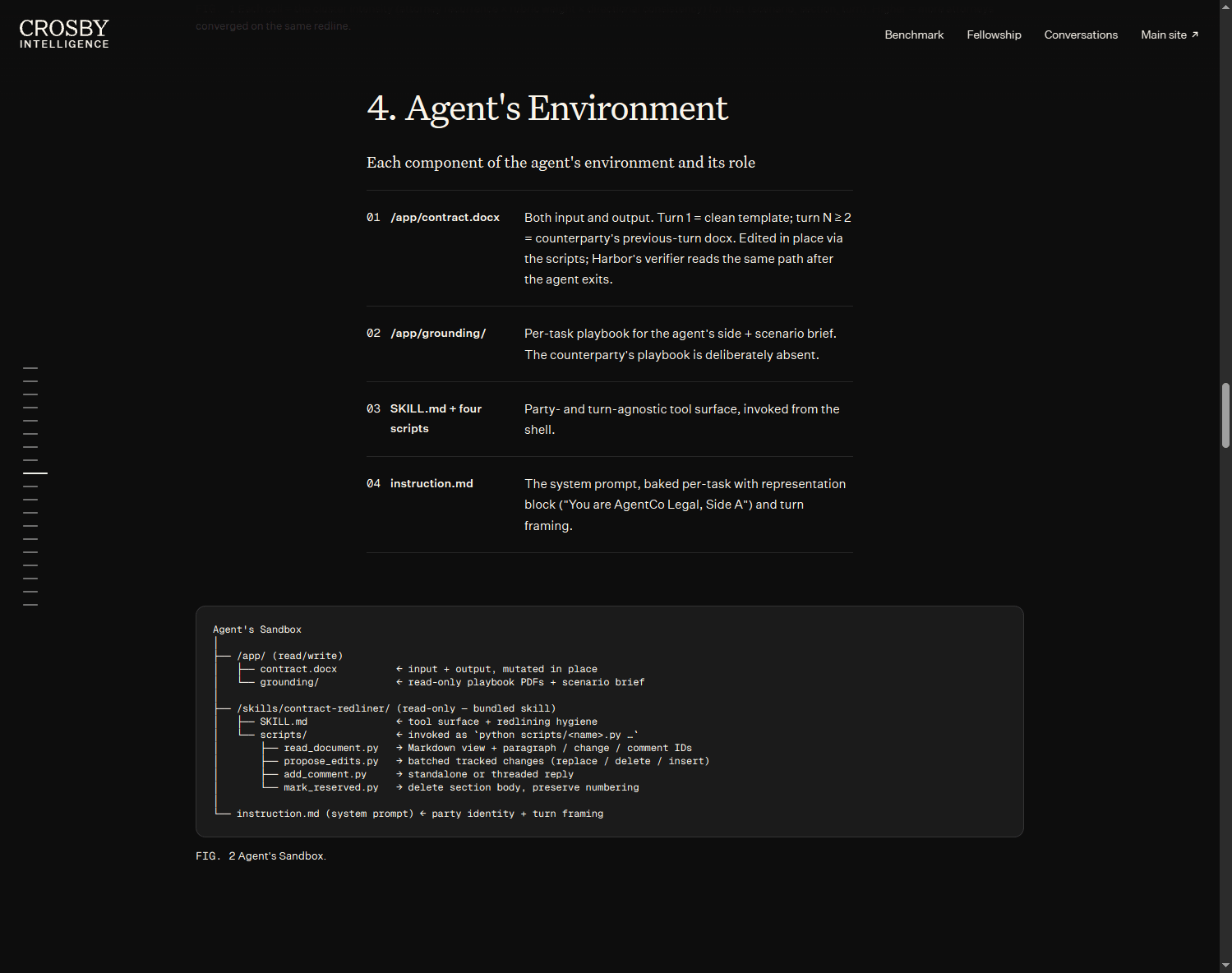
Similarly to the security harness discussed above, Crosby has developed an evaluation process and environment for comparing different frontier AI models, along with generating a dataset created by participating attorneys as they work through each negotiation. They describe this as a “verifiable rewards” problem - law rarely has one right answer, so they’re attempting to address this by building attorney-authored rubrics to train and steer the models. This is combined with knowledge agents with memory that store and recall details about each client’s case and situation.
Fine Tuned Small Open-Source Models
Using a Together.ai, Parsed fine-tuned small open-source models for healthcare scribing and reported back in 2025 that their approach delivers 60% better accuracy and 10–100x lower inference cost than the largest proprietary reasoning models. By pairing the small models with rigorous evaluation and task-specific optimization they were able to squeeze more out of a smaller model.
And this move was predicted, in October last year in a post on his blog Seldo, Laurie Voss predicted that 2026 is the year of fine-tuned small models as companies chasing margins and hit diminishing returns on frontier models.
What can you do?
Running an LLM locally is now a trivial task, tools like Ollama and LM Studio make this easy for almost anyone to set up. However to let the models punch above their weight, there is a second layer of tools available that let you orchestrate and break a task down into steps.
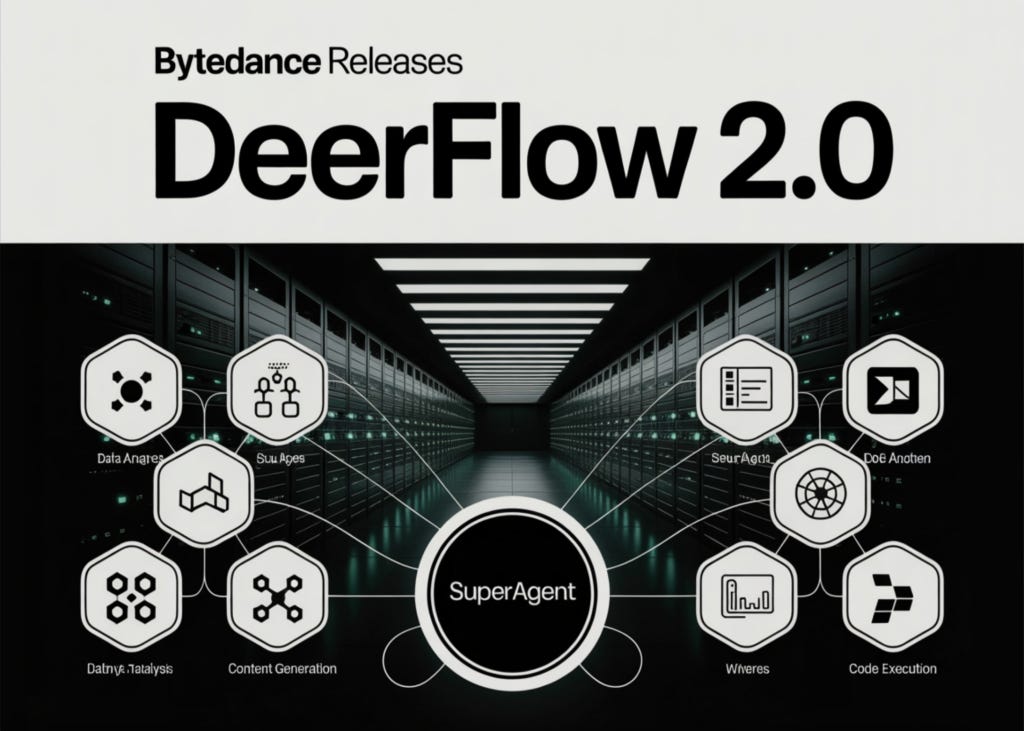
DeerFlow 2.0 from ByteDance (of TikTok fame) hit the #1 spot on GitHub back in February as one of the most “hyped” options right now, built around task decomposition as the core mechanism. Using markdown you can encode your own unique processes through a skills system, and even add your own skills.
A good example might be a folder full of hundreds of lecture transcripts, and you want to find out which topic and lecture is most applicable to a certain issue or topic of discussion. Instead of overloading the context, a task decomposition tool can break that down.
However, because everything is encoded at the prompt level, this only goes so far. Better and certainly more flexible than just pasting what you want into a frontier model, and approachable for those with basic computer science knowledge (as demonstrated by the popularity), but limited in that it doesn’t improve or optimize itself to the task at hand.
The alternative is what Parsed did and what Crosby appear to be doing, compiling the workflow directly into a small model's weights (some have described these as “subterranean agents”) where at inference the model uses only a minimal system prompt with no procedural instructions or routing logic, because the procedure has been fine-tuned into the weights, reaching something closer to frontier quality at a much lower cost. And there are now tools available to do this that are improving all the time, like Unsloth and Axolotl.
There’s a lot of blue ocean out there to tune small models and get results, and I think we’re only just beginning to see the potential for many different applications.